[email protected] | +886-2-2718-9599 Mon - Fri: 8:00 AM - 6:00 PM CST

Power Solutions by Application

Every deployment environment has distinct requirements for voltage, temperature range, ingress protection, and redundancy. We organize our product families around the applications they serve, so your engineering team can find the right starting point faster.

Telecom Power Solutions

Telecommunications & 5G

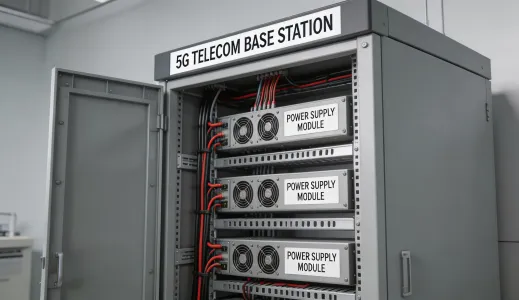
Base station power, small cell deployments, fiber distribution hubs, and central office equipment each demand different specifications. Our telecom-rated products are designed for the extended temperature ranges (-40 C to +70 C) and high humidity conditions typical of outdoor and semi-outdoor installations.

  • 48V DC systems with N+1 redundancy and hot-swap modules
  • PoE injectors and midspan power for IP cameras and wireless APs
  • Battery charger units with temperature-compensated float voltage
  • NEBS Level 3 and ETSI EN 300 132-2 compliant configurations
Discuss Your Telecom Project
LED Lighting Solutions

LED Lighting & Signage

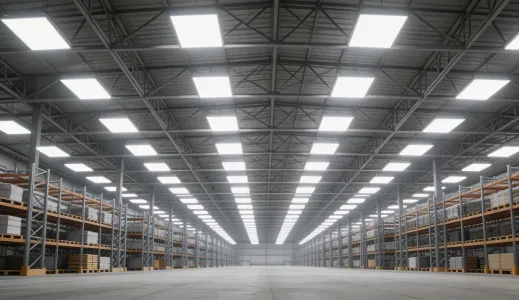
Whether you are specifying drivers for a 200-luminaire warehouse retrofit or a single outdoor signage installation, the driver determines the reliability and efficiency of the entire lighting system. We produce over 500,000 LED drivers annually in constant-current and constant-voltage configurations.

  • Constant-current (350mA to 3.5A) and constant-voltage (12V, 24V, 48V) models
  • Dimming interfaces: 0-10V, DALI-2, PWM, and programmable via NFC
  • IP67-rated models for outdoor and wet-location installations
  • THD below 15% to meet IEEE 519 harmonic limits
Request LED Driver Samples
Industrial Automation Solutions

Industrial Automation

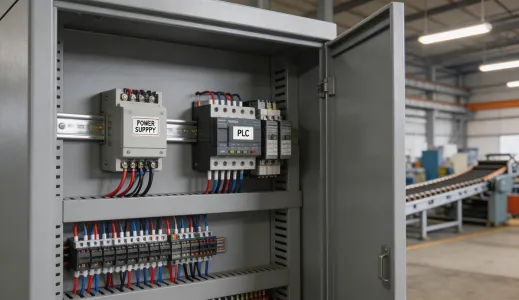
Factory automation systems demand power supplies that start reliably after power interruptions, ride through brief voltage dips, and deliver stable output under rapidly changing loads from solenoid valves and servo drives.

  • DIN rail 24V/48V units with DC OK relay output for PLC monitoring
  • Power boost mode (150% for 5 seconds) for inductive load startup
  • Parallel operation with active current sharing for higher power demands
  • Conformal-coated PCB options for corrosive or dusty environments
Get Industrial PSU Recommendations
Transportation Solutions

Transportation & Railway

Rolling stock and wayside equipment require power supplies that withstand vibration, wide input voltage swings, and EMC environments far more severe than typical industrial applications. Our railway-rated units comply with EN 50155 and EN 50121-3-2.

  • Wide input range (12-160V DC) for battery and catenary feeds
  • Vibration and shock resistance per IEC 61373 Category 1
  • Conducted and radiated EMC per EN 50121-3-2
  • Operating temperature -40 C to +70 C with derating above +50 C
Discuss Railway Requirements

Product Selection Quick Reference

Application Recommended Series Output Range Key Feature
Telecom Shelter NDR / SDR Series 24V - 48V, 120W - 960W DIN rail, extended temp
5G Small Cell DDR / RSD Series 48V, 30W - 480W DC-DC, wide input range
LED High-Bay HLG Series 12V - 54V, 40W - 600W IP67, DALI dimming
LED Panel LCM / PCD Series 350mA - 1400mA Constant current, 0-10V dim
PLC Cabinet NDR / EDR Series 24V, 75W - 480W DC OK relay, power boost
Railway Wayside RSD / NSD Series 12V - 48V, 200W - 1000W EN 50155, wide input

Technical Trade-Offs in Power Architecture Selection

Selecting the right power supply topology involves real engineering trade-offs. Below we outline two common decision points our customers face, with the pros and cons of each approach.

Centralized vs. Distributed Power Architecture

Telecom shelters and data center racks typically choose between a single high-power centralized supply (e.g., one 3kW unit feeding a 48V bus) and multiple distributed point-of-load converters (e.g., individual 100-300W DC-DC converters at each card slot).

Centralized Approach

  • Fewer components, simpler inventory management
  • Higher conversion efficiency at the main stage (typically 94-96%)
  • Single point of failure unless N+1 redundancy is added, which increases cost by 30-50%
  • Longer bus cable runs increase I2R losses at high currents

Distributed Approach

  • Each load gets tightly regulated voltage, reducing noise sensitivity
  • Failure of one converter does not affect other loads
  • Higher total component count and more complex thermal management
  • Each DC-DC stage adds 2-5% conversion loss, so two-stage systems reach 89-92% overall

MeanWell offers both topologies. For telecom shelters under 2kW total load, our NDR/SDR centralized series is typically more cost-effective. Above 3kW with mixed voltage requirements, distributed DDR converters provide better fault isolation.

AC-DC Direct Feed vs. DC Bus with Battery Backup

Mission-critical telecom and industrial installations must decide whether to power equipment directly from rectified AC mains or through an intermediate 48V DC bus with battery backup for ride-through during outages.

AC-DC Direct Feed

  • Lower system cost (no battery bank, no charge controller)
  • Simpler maintenance with no battery replacement cycle (lead-acid every 3-5 years, lithium every 8-10 years)
  • No ride-through protection during mains interruptions
  • Suitable where grid reliability exceeds 99.95% annual uptime

DC Bus with Battery Backup

  • Provides 4-8 hours of autonomy depending on battery bank sizing
  • Protects against voltage sags, surges, and brief outages (< 15ms transfer time)
  • Adds 20-35% to initial system cost and ongoing battery maintenance expense
  • Required by most Tier 1 carriers for cell sites (mandated by 3GPP reliability targets)

Our DRC series integrates rectifier and battery charger in a single DIN rail unit, reducing the cost premium of battery backup to approximately 15% over a standalone AC-DC supply of equivalent power rating.

Operating Limitations & Derating

All power supplies operate within defined boundaries. Understanding these limits helps you size the correct unit and avoid premature failures. The following constraints apply to most MeanWell product families.

Thermal Derating

Most enclosed and DIN rail units deliver full rated power up to 50 C ambient. Above 50 C, output must be derated linearly — typically by 2.5% per degree Celsius. At 70 C, available output is approximately 50% of nameplate rating. Installations in sealed enclosures without forced airflow must account for internal temperature rise of 10-15 C above ambient.

Altitude Derating

Dielectric withstand voltage and cooling effectiveness decrease at high altitude due to lower air density. Above 2,000 meters, output power must be derated by approximately 1% per 100 meters. At 5,000 meters (the limit for most standard products), available output is roughly 70% of sea-level rating.

Inrush Current

Switching power supplies draw a brief inrush current at power-on (typically 30-60A for a 480W unit, lasting less than 1ms). When connecting multiple units to a single circuit breaker, the cumulative inrush may trip the breaker. We recommend staged power-up sequencing or use of inrush current limiters for installations with more than 4 units on one branch circuit.

Minimum Load Requirement

Some converter topologies (particularly flyback and LLC resonant) require a minimum load of 5-10% of rated output to maintain regulation. Operating below minimum load can cause output voltage to rise above the specified tolerance band. Check the individual datasheet for the minimum load specification of your selected model.

Not Sure Which Product Fits Your Application?

Describe your operating conditions and our applications engineers will recommend the most cost-effective solution, backed by full test data and compliance documentation.

Get a Recommendation